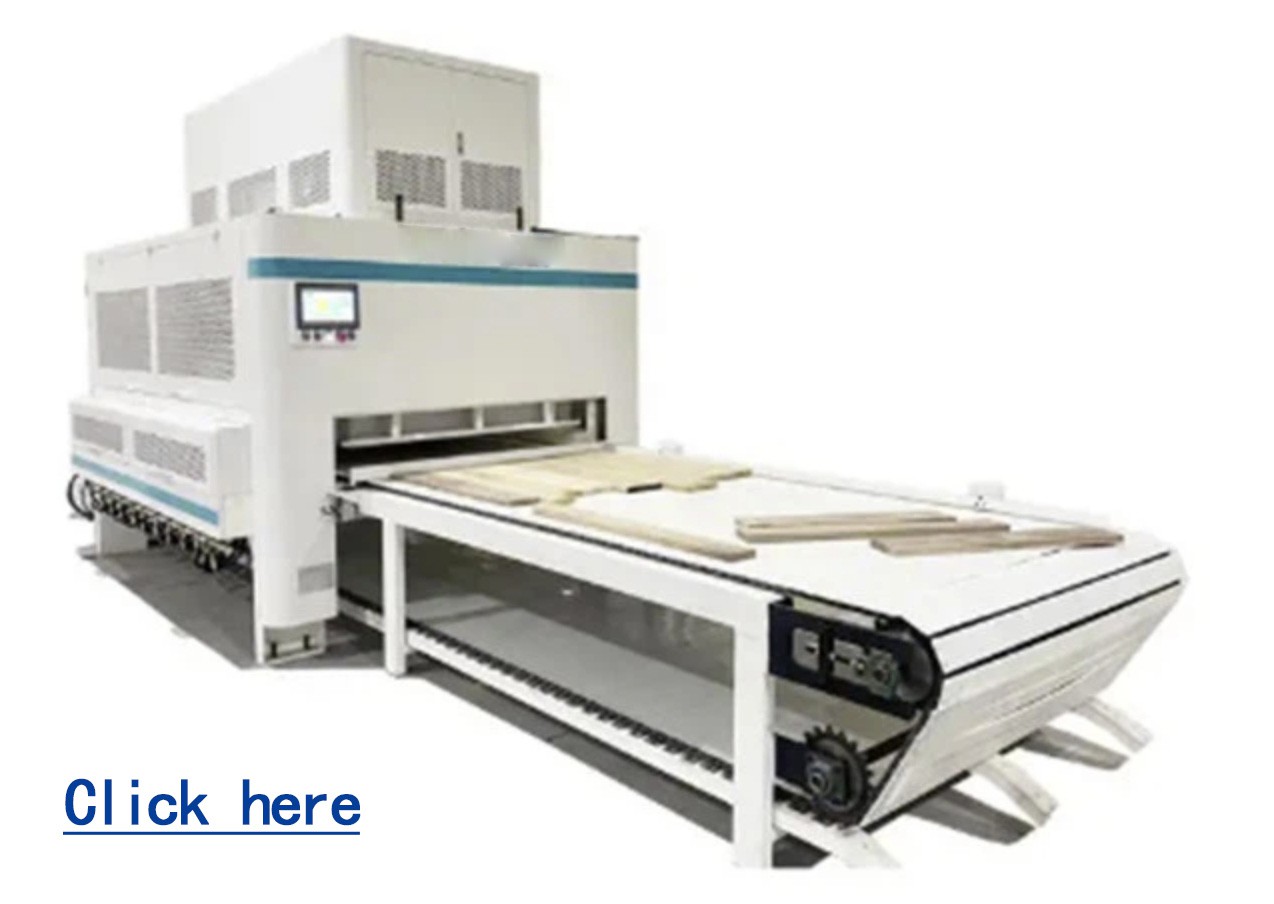

What are the common faults of the high-frequency splicing machine?
Mechanical equipment failures are common occurrences. There are many reasons for these failures, often stemming from prolonged use or neglect in maintenance.
1. Plate ignition is caused by short circuits or overcurrent leading to plate discharge. The solution is to first identify the cause of ignition. Generally, common situations include excessive glue causing overflow onto the upper and lower plates, or severe scars on the wood. Once the cause is determined, the ignition site can be smoothed by grinding. Another scenario involves the possibility of metal objects in the wood causing a short circuit between the upper and lower plates, resulting in more serious ignition. The plates can be penetrated, and the penetrated areas can be filled with stainless steel welding rods, then smoothed by grinding.
2. Overcurrent is mainly due to improper adjustment by the customer, where the current of the anode and grid does not match. In general, the manufacturer will provide professional training to the operators. Adjusting the high frequency is necessary when changing the plate thickness. If operators are frequently changed, various problems may arise due to the unfamiliarity of new operators.
3. Some small parts manufacturers may provide free items upon delivery, or discuss with manufacturers to prepare some vulnerable parts to avoid delays in production cycles due to remote roads.
4. If the manufacturer's after-sales personnel are professional, issues can be resolved through telephone communication. However, serious faults caused by improper operation can only be resolved by the manufacturer.