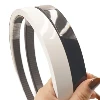


Laser Edgebanding
Laser edging technology allows the perfect combination of boards and edging rises to a new height, mainly because the adhesive layer used in laser edging is better than hot melt adhesive edging, showing good performance so that the quality of the edging is improved a lot, especially the environmental protection performance has been jumped up.
Problems with hot melt adhesives
That hot melt adhesive edging will be solvent-free hot melt adhesive (such as EVA, PUR, APAO) it is coated on the substrate, and then through the pressure to make it bonded. But the problems of hot melt adhesive include the following.
Due to the existence of hot melt adhesive layer, there will be a gap between the board and the edge sealing strip, and with the use of time and moisture stains invasion, edge sealing gap is more and more obvious, and gradually affect the gluing performance.
01
It takes a long time to heat up the hot melt adhesive. It increases the energy consumption and reduces the efficiency of sealing.
02
In the use of hot melt adhesive at the same time, the adhesive will also cause pollution to the machine and equipment, processing boards, so you need to carry out post-cleaning, increasing the workload.
03
Hot melt adhesive needs to be equipped with a special heating and storage device for hot melt adhesive, and every time you change the color of edge banding, you also need to change the glue box, which is very troublesome.
04
The principle of Laser Edgebanding
The laser edge band is coated with a special polymer, which melts under laser light, and at this time it has superior bonding properties, much better than hot melt adhesives. In addition, the laser source used for laser edgebanding is diode-emitting, which emits a beam that can be adjusted to the laser window according to the thickness of the board, allowing the high-energy laser beam to converge on the edgebanding tape with the appropriate and precise width.The polymer on the edgeband absorbs the laser energy and melts rapidly. Under the pressure of the edgebanding rollers, the molten polymer penetrates the surface of the board to form a high adhesive force, which provides excellent bonding strength between the board and the edgeband, and at the same time, the appropriate amount of polymer fills in the gap between the board and the edgeband, and between the edgeband and the edgeband, resulting in a seamless, seamless edgebanding quality.

What are the materials used for laser edge banding?
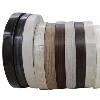
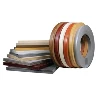
Laser edgebanding is available in acrylonitrile, butadiene and styrene copolymers (ABS), polypropylene (PP), polyvinyl chloride (PVC) and polymethyl methacrylate (PMMA). Laser edgebanding replaces the traditional hot melt adhesive with a special polymer functional layer, so that the base material and the functional layer of the edgebanding are made in one piece.Compared to traditional edgebanding, laser edgebanding simplifies the edgebanding process, saves time, and improves the quality of the edgebanding of the boards and maintains their stable performance. Importantly, laser edging achieves a seamless edging effect in the appearance of the panels, and improves the physical and chemical properties, which greatly improves the service life of the furniture.
More Knowledge
If you are interested in this Knowledge or other related products, you can contact us at any time, we also have other products . You can click below learn more about it.