




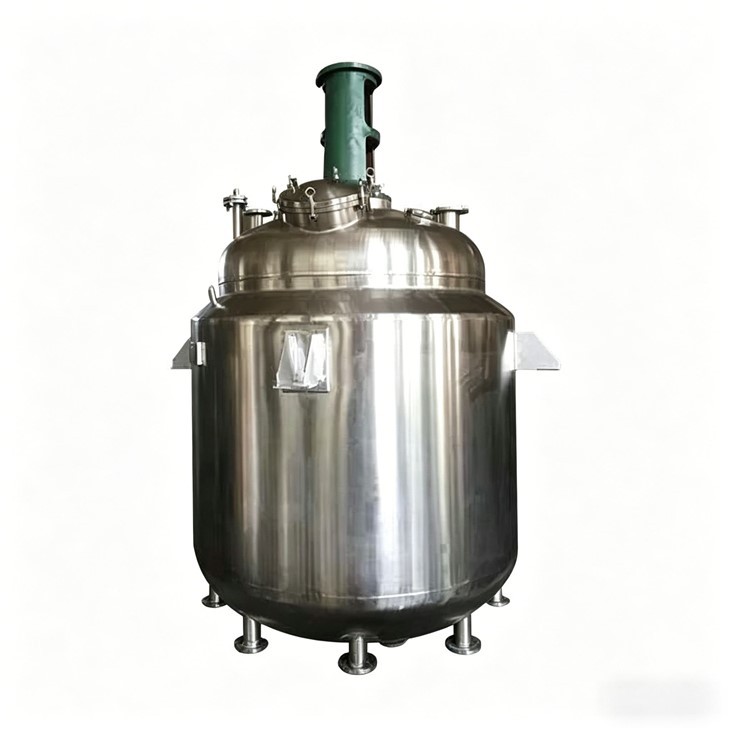
continuous flow stirred tank reactor
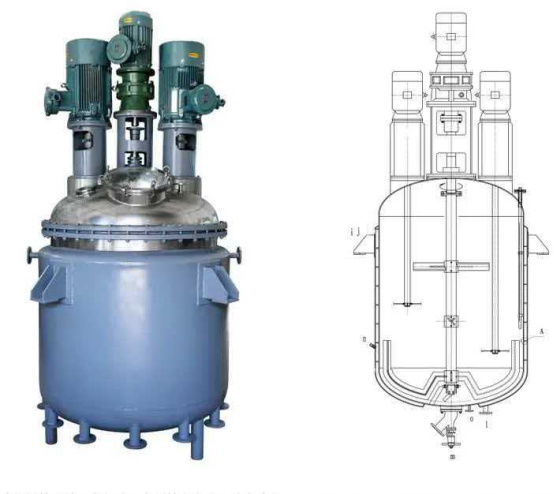
continuous flow stirred tank reactor
A continuous flow stirred tank reactorr is a cylindrical or rectangular industrial vessel equipped with a mechanical stirring system, designed to mix reactants uniformly and control reaction conditions (temperature, pressure, pH, etc.) to facilitate chemical or biological reactions. Its core components include a reactor vessel, stirring system (motor, reducer, impeller), heating/cooling system (jacket or coil), temperature/pressure control system, sealing device, feed/discharge ports, and safety protection devices. The stirring system is the "soul" of the reactor, with various impeller types (paddle, anchor, turbine, propeller, etc.) tailored to different material viscosities and mixing requirements-ensuring reactants are fully homogenized, eliminating concentration and temperature gradients, and accelerating reaction rates.Stirred Tank Reactors operate in two main modes: batch operation and continuous operation. Batch operation involves adding all reactants into the vessel at once, mixing and reacting under controlled conditions, then discharging the product-ideal for small-batch, high-value products such as pharmaceutical intermediates and fine chemicals,high-throughput production such as bulk chemicals and food additives. The reactor's vessel is typically made of 304 or 316L stainless steel, with precision polishing to ensure a smooth, non-porous surface that is easy to clean, corrosion-resistant, and non-contaminating-meeting GMP, FDA, and other strict hygiene and safety standards for pharmaceutical, food, and biotech industries.
Technical Parameter Table
|
Parameter Category |
Specification Details |
Test Standard |
Typical Value |
Customizable Range |
|---|---|---|---|---|
|
Vessel Material
|
Stainless Steel (304, 316L, 321); Optional: Hastelloy, Titanium for extreme corrosion |
ASTM A240, GB/T 24511, ASME VIII |
304/316L Stainless Steel |
304, 316L, 321, 2205 Duplex, Hastelloy, Titanium |
|
Effective Volume |
Lab-scale to industrial-scale capacity |
GB/T 150, ASME VIII |
50L - 5000L |
1L (lab) - 30000L+ (industrial) |
|
Reaction Temperature Range |
Normal temperature to high temperature |
ASTM D1598, GB/T 151 |
-20℃ - 300℃ |
-50℃ - 500℃ (high-temperature customization) |
|
Temperature Control Precision |
Accuracy of temperature regulation |
GB/T 13610, IEC 60751 |
±1℃ |
±0.5℃ - ±2℃ (adjustable) |
|
Working Pressure |
Pressure resistance (gauge pressure) |
GB/T 150, ASME VIII |
0.1 - 2.0 MPa (atmospheric to medium pressure) |
0.1 MPa (atmospheric) - 10.0 MPa (high pressure) |
|
Heating/Cooling Method |
Common temperature control methods |
GB/T 151, ASTM D2779 |
Steam Heating, Heat Transfer Oil Heating, Electric Heating; Jacket/Coil Cooling |
Steam, Heat Transfer Oil, Electric, Microwave; Jacket, Inner Coil, External Cooling |
|
Heating Power |
Power of the heating system |
GB/T 14048.1, IEC 60335 |
5kW - 100kW |
1kW - 200kW (based on volume and temperature demand) |
|
Stirring System |
Impeller type, speed, and motor power |
GB/T 150, ASTM E1462 |
Paddle/Anchor/Turbine Type; 10 - 150 rpm; 1.5kW - 15kW |
Paddle, Anchor, Turbine, Propeller, High-Shear, Scraper Type; 10 - 500 rpm; 0.55kW - 55kW |
|
Vessel Thickness |
Thickness of the reactor vessel |
GB/T 150, ASME VIII |
6mm - 16mm |
4mm - 30mm (based on pressure and volume) |
|
Sealing Type |
Sealing device to prevent leakage |
GB/T 150, ASTM F3019 |
Mechanical Seal (single/double), PTFE Packing Seal |
Mechanical Seal, PTFE Packing Seal, Magnetic Seal (for sterile applications) |
|
Heat Transfer Coefficient |
Efficiency of heat transfer |
ASTM C177, GB/T 10294 |
200 - 1000 W/(m²·℃) |
150 - 1200 W/(m²·℃) (based on heating/cooling method) |
|
Control System |
Parameter control and monitoring |
IEC 61508, GB/T 20438 |
PLC Control, Touch Screen, PID Temperature/Pressure Regulation |
PLC Control, Remote Monitoring, Data Logging, Automatic Alarm, CIP/SIP Sterilization |
|
Operating Mode |
Batch or continuous operation |
GB/T 150, ASME VIII |
Batch Operation |
Batch, Continuous (CSTR), Semi-Batch |
|
Certifications |
Safety, hygiene, and quality certifications |
FDA, GMP, RoHS, REACH, ISO 9001, ASME |
FDA, GMP, ISO 9001 |
Custom certifications (ATEX, CE, UL) based on industry needs |
|
Support Type |
Installation support structure |
GB/T 150, ASME VIII |
Floor-Standing, Ear-Type Support |
Floor-Standing, Suspended, Ear-Type, Mobile (with wheels) |
Core Advantages
Exceptional Mixing Efficiency and Uniform Reaction Environment
The mechanical stirring system, with customizable impeller types, ensures thorough homogenization of reactants-eliminating concentration gradients and dead zones inside the vessel. This uniform mixing promotes frequent collisions between reactant molecules, accelerating reaction rates and reducing reaction time by 20%-40% compared to non-stirred reactors. The consistent mixing also ensures uniform temperature distribution, preventing local overheating or cold spots that can cause side reactions, improve product purity, and reduce by-product formation-critical for high-value products such as pharmaceuticals and fine chemicals.
Flexible Operation Modes for Diverse Needs
Stirred Tank Reactors support batch, semi-batch, and continuous (CSTR) operation modes, making them suitable for all production scales-from lab-scale R&D (1L-50L) to pilot production (50L-500L) and large-scale industrial manufacturing (500L-30000L+). Batch operation is ideal for small-batch, multi-variety production (e.g., pharmaceutical intermediates), while continuous operation enables 24/7 high-throughput production (e.g., bulk chemicals, food additives). This flexibility allows businesses to adapt to changing production demands without investing in multiple types of equipment.
Precise Parameter Control and Consistent Product Quality
Equipped with an intelligent control system (PLC, touch screen, PID regulation) and high-precision sensors, the reactor enables real-time monitoring and precise control of temperature (±0.5℃ optional), pressure, stirring speed, and pH value. This precise control ensures stable reaction conditions, resulting in consistent product quality batch after batch-reducing product variability and rejection rates. For industries with strict quality standards (e.g., pharmaceuticals, food), this consistency is critical for complying with GMP, FDA, and other regulations.
Corrosion Resistance and Material Safety
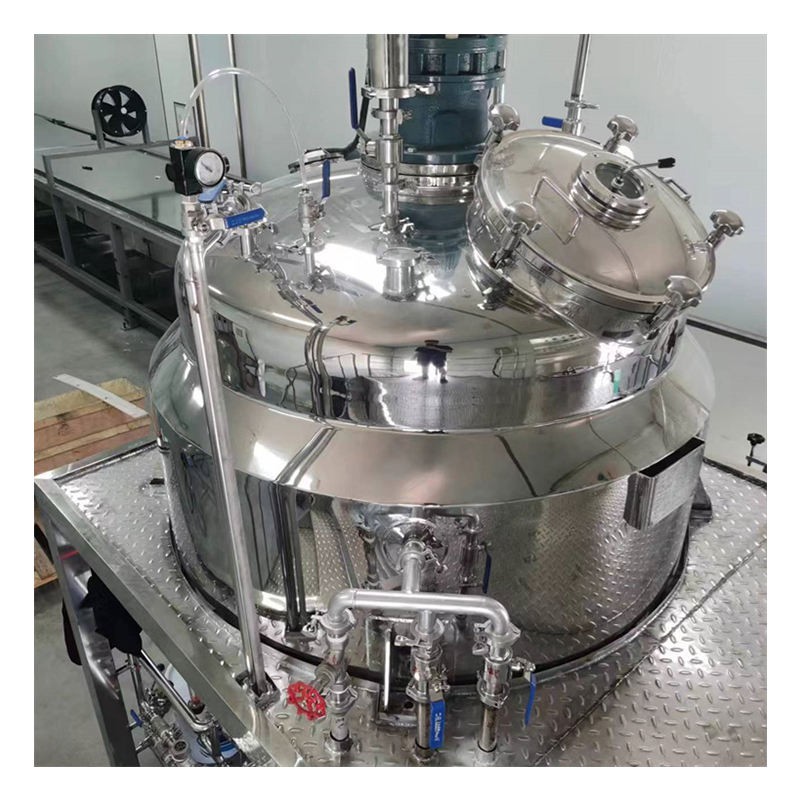
The reactor vessel is made of high-quality stainless steel (304, 316L) or specialized alloys (Hastelloy, Titanium), offering excellent corrosion resistance to strong acids, alkalis, organic solvents, and salt-containing media. 316L stainless steel, in particular, contains molybdenum, which resists chloride-induced stress corrosion cracking-ideal for harsh working conditions. The precision-polished inner surface (Ra≤0.8μm) is non-porous, non-absorbent, and easy to clean, preventing material contamination and ensuring product safety-meeting the strict hygiene requirements of pharmaceutical, food, and biotech industries.
Applications
For Chemical Industry Customers
Chemical production often involves corrosive materials and high-temperature preheating needs, and the reactor's 316L stainless steel material and corrosion-resistant design can withstand the erosion of strong acids, alkalis, and organic solvents, avoiding equipment corrosion and material contamination. Precise temperature control ensures that chemical materials are preheated to the optimal reaction temperature, reducing side reactions and improving product yield and purity. The energy-saving design reduces production costs, while the customizable volume and pressure adapt to the preheating needs of different chemical processes (such as sulfonation, nitration, and polymerization).
For Pharmaceutical Industry Customers
Pharmaceutical production has strict requirements for material safety and hygiene, and the reactor's stainless steel body (Ra≤0.8μm precision polishing) meets GMP standards, ensuring no material residue and easy cleaning and sterilization (can withstand 121℃ moist heat sterilization). The precise temperature control (±0.5℃ optional) is suitable for the preheating of pharmaceutical intermediates, enzymes, and vaccines, avoiding temperature fluctuations that affect product activity. The sealed design prevents cross-contamination, ensuring the safety and compliance of pharmaceutical products, and helping customers pass FDA and GMP certifications.
For Food and Beverage Industry Customers
Food preheating requires high hygiene and no pollution, and the reactor's food-grade 304 stainless steel material is non-toxic, odorless, and does not react with food materials, ensuring food safety. It is suitable for the preheating of food additives, fruit juices, dairy products, and condiments-uniform preheating ensures consistent product taste and quality. The easy-to-clean design avoids cross-contamination between different batches of food, and the energy-saving heating system reduces production costs, making it ideal for small and medium-sized food processing enterprises.
More Products
If you are interested in this continuous flow stirred tank reactor or other related products, you can contact us at any time, we also have other products in the filters products industry. You can click below learn more about it.

Hot Tags: continuous flow stirred tank reactor, China continuous flow stirred tank reactor manufacturers, suppliers, factory, Industrial Chain Of Adhesive, PUR Hot Melt Glue Machine, Hot Melt Glue Machine
You Might Also Like




Send Inquiry